An Angel in the Kitchen is a real food and family recipe blog.
A place to be able to find our recipes again & remember how we made stuff!
Showing posts with label Medicinal Herbs. Show all posts

Sunday, December 26, 2021

Pohutukawa Flower Syrup and Spice

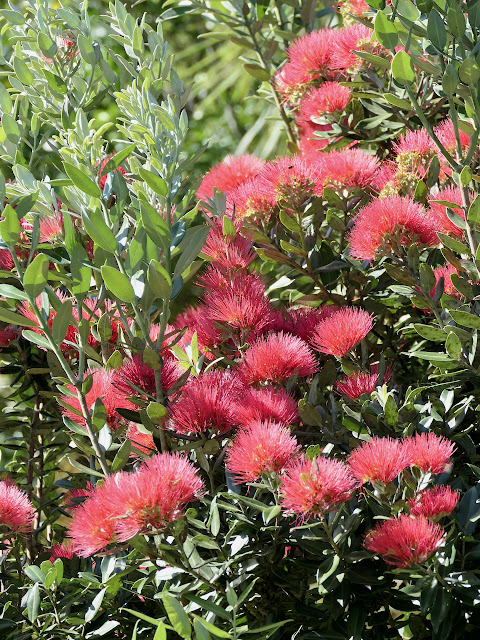
This December we set out to spend time with the magnificence of the Pohutukawa trees in flower throughout Hawke's Bay. Along the way we discovered that the stamens of the blooms can be used to make a delightful cordial. There is very little reference to the flower being used by Maori, however, there are two contemporary foragers that have been sharing about their use of these special blossoms on social media so I went ahead to see just what all the fuss was about.  
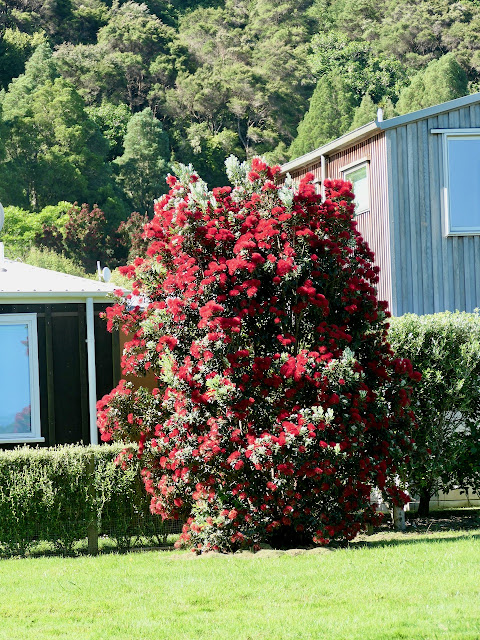
Once you start taking notice it is amazing just how many variations of the colour red Pohutukawas bloom in. We found these trees out at Waipatiki beach in the week before Christmas.
I adore that these tenacious native trees are known as the New Zealand Christmas tree.
There's a bit of an art to gathering the stamens as they don't just nicely fall in to your hand, unless they are ready to drop. Picking the whole flower head isn't much use as they are still quite difficult to remove even when dry. So, like many foraging practises the best idea is to slow down, be patient & grateful & take your time.

The stamens dry very quickly & have a lovely berry fruity fragrance.
Pohutukawa stamens with Kawakawa fruit
To make Pohutukawa cordial simply bring a cup of water & a cup of sugar to the boil & then stir to dissolve the sugar. Add 1 tsp citric acid & 1 1/2 cups of the stamens. Make sure that you've removed any of the hard green bits first. Cover & leave to infuse all day or overnight. Strain & bottle. 
This is the best post I have found so far about making this cordial over at Kailash Herbs.
You can reduce the sugar content of the cordial but it won't keep as well & the balance will be different. Same with the citric acid- it helps to acidify what would otherwise be a very sweet syrup. Lemon would swamp the delicate flavour of the Pohutukawa flowers.

Increase quantities according to what you have & how much cordial you'd like to make. The above amounts make just enough for a 500ml bottle. White cane sugar or raw sugar both work fine.

We think that the cordial tastes much like strawberry jam. It is lovely mixed in to fizzy water.

The dried stamens can also be ground in a spice grinder until very fine & then put through a fine sieve to produce a deep red delicious "spice". The desert below is a mixture of whipped cream, thick natural yogurt, honey & a large teaspoon of Pohutukawa spice. The strawberries are marinated in a little maple syrup and the green stuff is finely ground pistachio nuts.
The same mix can also be frozen to make a very nice semifreddo. Just remove from the freezer and allow to sit for 10 minutes before serving.
I learnt about making Pohutukawa spice from this post here at Finders Eaters Foraging.

The sauce in the above desert I made by simmering a few wild cherries for 20 minutes in a little water, (Prunus padus var padus) that we discovered out at Sacred Hill, & then adding a little honey.

Such a rich delicious flavour.

For Christmas I made a Spanish Cream using this recipe & adding a large teaspoon of Pohutukawa spice. I would leave out the vanilla next time as it overwhelmed the fruity flavour of the flowers. 
Charming served in pretty teacups.

Delicious served with roasted strawberries. When the strawberries are cooked but still have a little liquid left I mixed in a little honey & some Pohutukawa spice. The wafer was some Speculaas that Dutch friends gave us- perfect combination!


Katie x

Tuesday, July 14, 2020

More Violets- Simple Syrup & Cheesecake

Violets are amazing- they turn up in the depths of winter and provide such a wonderful lift through the coldest months with their glorious scent, sweet little flowers and their gentle medicine. Last week I popped in to the valley at Keirunga gardens to visit the wild violets under the oak trees and gathered a little basketful of sweetly scented blooms.
 I tried another recipe for making violet syrup this time round. It was so simple and so much fun.
Put 2 cups of violet flowers in to a bowl or jug & pour over them 2 cups of just boiled water.
Cover & let the violets steep for around half an hour.
After this time the colour will have drained from the flowers & the liquid will have become a gorgeous colour. Violet water is highly ph sensitive so your violet "tea" will alter in shade depending on what water you use and what else you add to the syrup.
 The little jug on the left is just the infused water, the one on the right has had a few drops of lemon juice added to it. 
Strain when you're ready & while the liquid is still warm stir in a tbsp of honey (to taste). This violet "syrup can now be stored in the fridge for a week or so, but I wanted to use the syrup so I made a cheesecake. 
I used my trusty base of 1/3 cup each of broken cashews, walnut pieces and coconut, 
add 4 or 5 soft dates (remove the stones first) 
Add a tbsp of melted coconut oil and briefly combine in a food processor until mixed to a fine crumb. Press in to a greased springform tin. I used two small tins.
The middle layer is so simple and tastes quite a lot like milk bottle lollies.
Gently warm a tin of coconut milk in a small pot until the fats have melted. Cool, pour most of the milk in to a bowl. Add 1 tsp vanilla essence, and a tbsp of honey and stir to dissolve. 
Add 2 tsps of gelatine to the remaining 1/2 cup of coconut milk in the pot. Stand a few minutes and allow to bloom. Then heat gently, stirring to dissolve the gelatine. Mix the two lots together in the bowl and pop in to the fridge. 
Now go through the same process for the violet syrup. Add some more lemon juice to the syrup if you like as it enhances the flavour of the violets. Pour a little of the cooled violet syrup in to a bowl and sprinkle over 2 tsps of gelatine. Allow to bloom. Heat for 30 seconds in the microwave, or in a small pot. Stir to dissolve. Cool- add back in to the main syrup and stir well. 
Now pour the coconut mixture over the base and return to the fridge.
When the mixture is just set, pour over the violet jelly very gently.
Chill for several hours or overnight until well set.
For a firmer jelly add an extra 1/2 tsp of gelatine to each layer.

 It seems like a strange thing to do- head to the river for a picnic in winter, but honestly winter picnics are wonderful! This is one of our favourite spots up Ellis Wallace road alongside the Esk river. In under the hawthorn bushes there can be found a carpet of wild violets.
The spring flowers were gathered at Pandora Pond on our journey here- we mostly picked the ones with broken or bent stems that would otherwise have been wasted.

  I even found a little patch of white violets on this visit- perfect for the top of our little cheesecake.

 I made a decoction of Silver Linden flowers and bracts (simmered for 15 minutes with half a cinnamon stick) and short brewed Sagewood and Elderflower tea. Such a glorious fragrant combination that was perfect for sipping in the outdoors...
while eating such a delicious and delicate treat.
More about using violets just here.
And the recipe for violet honey cough syrup here.
Katie X

Saturday, December 28, 2019

Elephant Milk!

Last Christmas, there was an unexpected stall at our Farmers' market run by some parents from Napier Central School. They were selling a book called Neighbourhood Eats. It was so beautifully presented & entirely made by the parents & PTA as a fundraiser. It's a gorgeous book, so we bought a copy. We love to support local endeavours. So.. this Christmas we decided to make the Elephant Milk, from the desserts section.

The recipe was provided by Cameron Huckle- a family favourite from Granny in Zimbabwe.
 Elephant milk has in fact been known to me for quite some time. Only, 40 years ago we called it Lemon Crunch Pie. You can find that recipe just here. One of the easiest dessert recipes ever & almost certainly universally loved. The only difference between Lemon Crunch Pie & Elephant milk is two egg whites & a tweek on the method- so just go with whatever works best for you.
Simply pour a can of sweetened condensed milk in to a bowl, add 300mls of cream, half a cup of lemon juice (preferably a Lisbon type- better flavour & setting effect) & the finely grated zest of the lemon. You can skip the zest if you prefer.
Beat altogether until thick, like whipped cream.
Beat the two egg whites to soft peaks & then fold those through the lemony mixture.
 Now pour in to bowls, tea cups or a large bowl  if you prefer & pop in to the fridge to set, or freeze for a couple of hours or overnight to make ice-cream, or pour over a biscuit base & there you have Lemon Crunch Pie- the easiest cheesecake you will ever make. The mixture can also be layered with crushed biscuits, nuts & custard.

 Since I made this at Christmas I have served this ice-cream with lychees, fresh shredded coconut (that I recently discovered in the freezer at the local Asian shop) White Soul strawberries, a ripe Kawa kawa fruit pulled off the stem & finally a drizzle of Linden honey.
 It tastes absolutely amazing together! But as Felicia was want to say- "If you like that sort of thing!"
 These Linden flowers are from a Silver Linden tree & we found them flowering on Christmas day. Their scent is like nothing else on earth- heady Linden plus deep jasmine notes- steeped in a light honey (I used Tawari) for a day or so & you have a truly magical elixir.

So...either keep it simple, or let your imagination run wild. I did!
Katie X

Saturday, March 30, 2019

Smoky Haw Sauce

Hawthorn is one of our favourite wild foods and is also a beautiful medicine and tonic for the heart. The berries, also known as haws, are ripe & ready to harvest through late March & the month of April. Some say that they taste sweeter after a frost, but if I'd followed that advice in one spot last year, I would have lost the lot to the pukekos!
We gathered these haws (below) up the Esk valley in Hawke's Bay last week and they are just perfect. Thanks to Abby @ Earthly Pearls and her wonderful hawthorn post and recipe for smoky haw sauce we have been able to get the hang of making our own sauce and it's totally worth the effort.
Haws are not something that you can pick in a hurry and since the plants have long thorns, are frequently found on steep hillsides and the fruit is quite small, we find that we come home with a very manageable amount of fruit with each picking.
Firstly, we sit for a few minutes at a time gently pulling off the berries and discarding as many stalks as possible & any leaves.
We both love this therapeutic process.
Next, wash the berries well and drain in a colander.
Put in to a pot that matches the amount of berries that you have and just barely cover with a mix of half water and half good apple cider vinegar.
I like to leave them to soak in the vinegar for an hour or two, or even overnight.
Then, turn on the heat & gently bring them to the boil. Simmer for around half an hour until the colour has gone out of the fruit and they have become soft.
Pour the liquid in to a jug and push the cooked berries through a coarse sieve or colander.
Using a potato masher is quite handy for squishing everything up and then we take turns working the soft stuff through the sieve until all we have left is some fibre and the little stones from inside the fruit or we've had enough- which ever comes first. Adding some of the liquid every now again also helps to get the pulp through to the other side.
Carefully scrape the goodness from the back side of the sieve as best you can & then discard the seeds that remain.
Pop the sieved hawthorn back in to the pot with any left over liquid.
This is not a strict recipe- just a general take it as it comes arrangement so, say to 
~ 3 cups of pulp I then add around a cup of raw sugar (or you could use honey)
~ 1/2 tsp of good salt, some ground black pepper
~ 1 large tsp of smoked paprika 
~ 1/2 tsp of chipotle powder (don't worry if you don't have any but it really is amazing)
Simmer all these bits and pieces together for perhaps 15- 20 minutes until thick and smooth.
Check the seasonings and balance and add more salt, sugar or spice to taste.
Pour in to sterilised jars or bottles.
No idea if it keeps well as we ate it all before we could find out!
Here is another plain version with measurements:

  1. 500g of hawthorn berries.
  2. 300ml of cider vinegar.
  3. 300ml of water.
  4. 170g of sugar.
  5. 1/2 tsp salt.
  6. freshly ground black pepper.


Saturday, February 2, 2019

Elderberry Elixir

Elderberry elixir is a glorious thing- so deliciously, fragrant and immune boosting too.
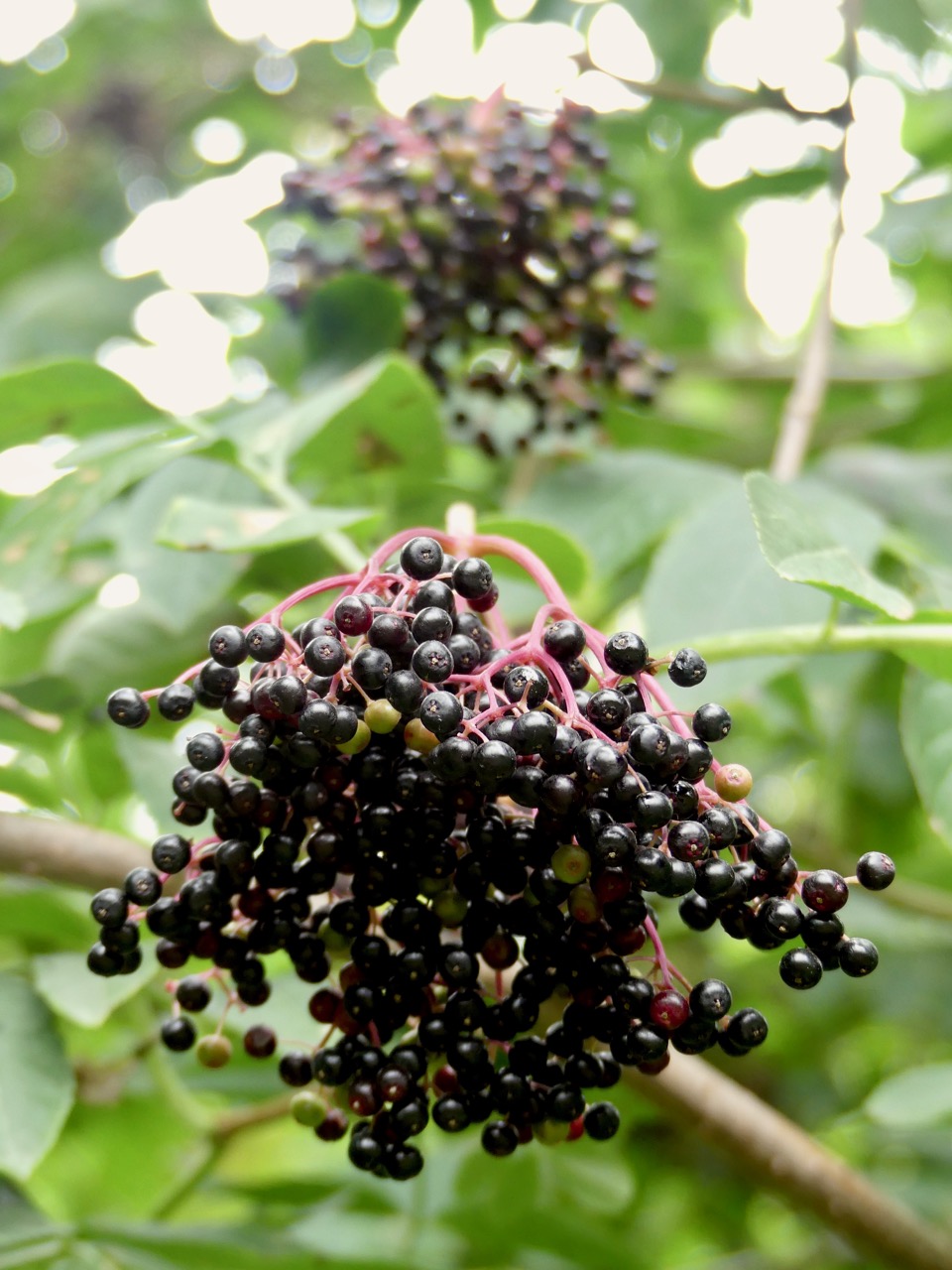
In contrast to the delicate creamy elder flowers with their musky, distinctive fragrance, the berries that ripen through late January and all through February are dark staining and powerful medicine. 


I have made syrups with the elder berries and even tried them raw, but they do not agree with me in that state, so instead, each year, I make an elixir- which is very simple and utterly delicious.
The berries must be as ripe as possible- dark and black, so you have to nab them just before the birds get to them. If they are not quite ripe all over just leave them in a bowl for a day or two & they will soon darken up. 
Remove the berries from their clusters with your fingers or a fork. I don't worry too much about the odd stalk. Fill any sized jar with the berries to around two thirds full, pour in some brandy until  the berries are just covered and then add honey to taste. You'll need a good lot of honey as elderberries have no natural sweetness of their own.
Leave in a cool dark place for a good month to 6 weeks before eating.

So all you need is a jar with a good lid, the elderberries, brandy and honey.

The first year I poured off the elixir and bottled it.
Now I just leave it all in together, as I find the berries are also then edible having been "marinated" nicely and are utterly delicious.
The elixir can then be taken by the spoonful, diluted in to water, fizzy water or added in to a hot drink of fruity tea. Drizzled over ice cream or added in to a berry cheesecake also works very nicely.
The elixir is then ready just in time for autumn and helpful for buoying the immune system as we head in to cooler weather. Elder flowers and berries are lovely medicine and provide useful and unique nutrients too. 

http://bearmedicineherbals.com/another-gratuitous-elderberry-post.html

You can also see how to make a simple elderflower fizz just here.