An Angel in the Kitchen is a real food and family recipe blog.
A place to be able to find our recipes again & remember how we made stuff!

Friday, March 1, 2019

Pickled Myoga Ginger Flowers & Sushi Ginger

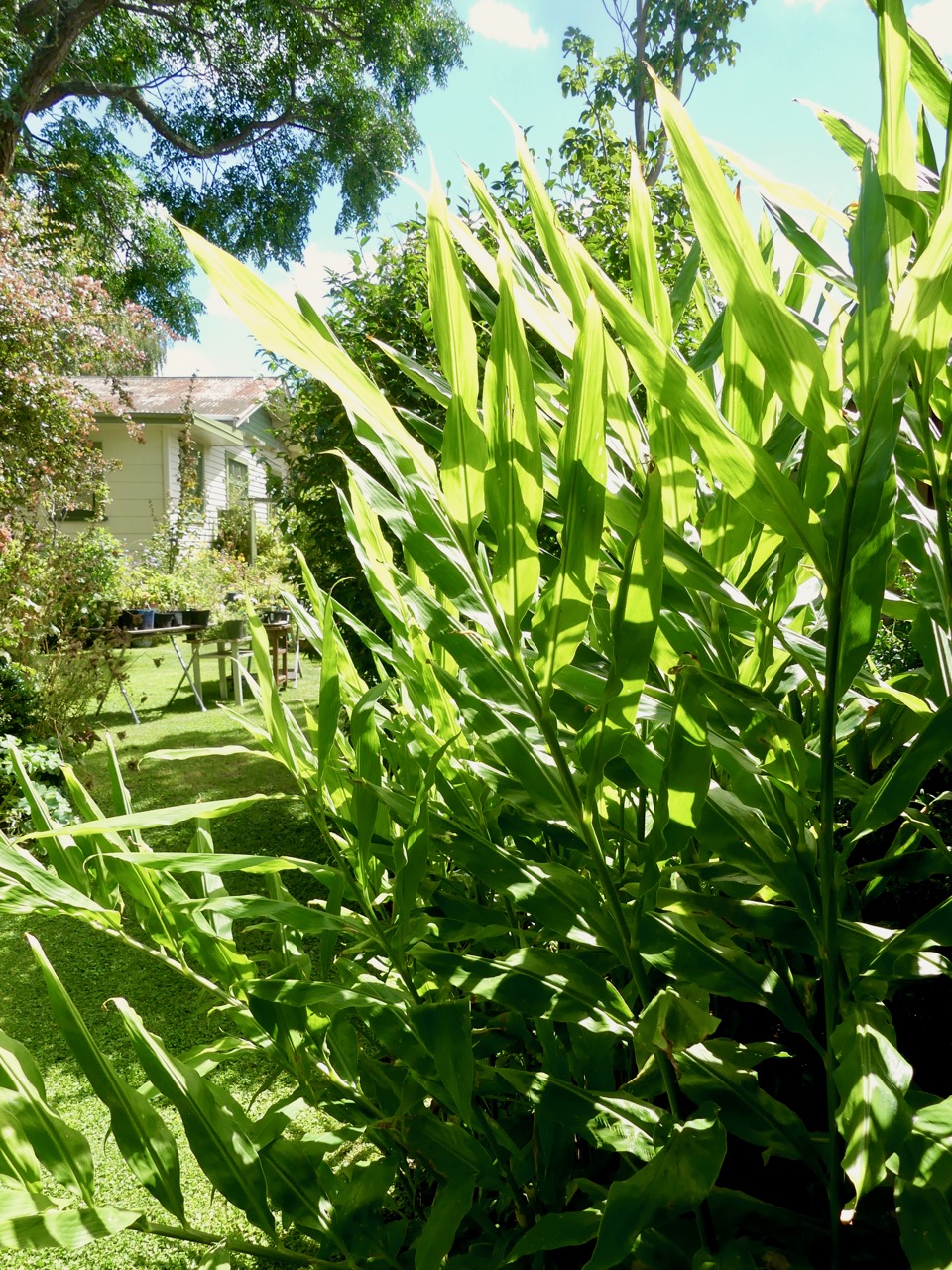
Myoga ginger is a Japanese woodland ginger that is used mostly for the edible flowers that appear in early autumn. These flowers are rather peculiar as they grow at ground level which is most surprising indeed.

Pick the flower buds and remove any tough outer layers.
Give them a little wash and pat dry.

Slice 8-10 buds finely which ever way takes your fancy.

Bring to the boil in a little pot:
1/2 C of apple cider vinegar & 1/ 2 C of rice wine vinegar (or just one or the other- your preference).
Add 1/4 C raw sugar & 1/2 tsp good salt.
Stir to dissolve.

Pour this mixture over the sliced ginger & add some red shiso leaves (also known as beefsteak) if you have them.
Leave to cool and infuse for several hours, or overnight.
Store in the fridge.

If you want to make more to keep just make the pickle into a sterilised jar with a plastic lid and seal. Keeps well for ages.

The red things in the colander are hyacinth beans and the green ones are Peans.
I added the few hyacinth beans & some shiso leaves to this pickle.
Very quickly the ginger is pickled & turns a wonderful pink colour and tastes amazing- perfect unami flavours.
 Lovely with radicchio..
 and fresh figs, feta, gynura bi-colour (red vegetable- tastes like gingery spinach) and avocado.
Any left over pickle juice can be used to make vinaigrette dressings. 

Just as easily made, is Sushi pickled ginger.
if I had realised sooner, just how easy it is to make Gari or Amazu Shoga, I would have made it years ago.
Peel & finely slice around 250 grams of good, tender looking fresh ginger root.
Put in to a bowl & sprinkle with 1 1/2 tsps sea salt. Stand for 30 minutes & then transfer in to a clean jar of a suitable size.
Bring 1 cup of good rice wine vinegar & 1/3 c sugar to the boil- stirring as you go to dissolve the sugar. I used a fine raw organic sugar.
Pour the hot vinegar over the ginger in the jar. Cool. Put on the lid & store in the fridge for a day or so until well pickled. The rice vinegar will turn the ginger pink quite quickly, but for a deeper shade you can also add a few Red shiso leaves.
Red shiso is a really tasty & interesting summer annual herb that we find delicious.
Red Shiso


Katie X

Thursday, February 28, 2019

Saturday, February 2, 2019

Elderberry Elixir

Elderberry elixir is a glorious thing- so deliciously, fragrant and immune boosting too.
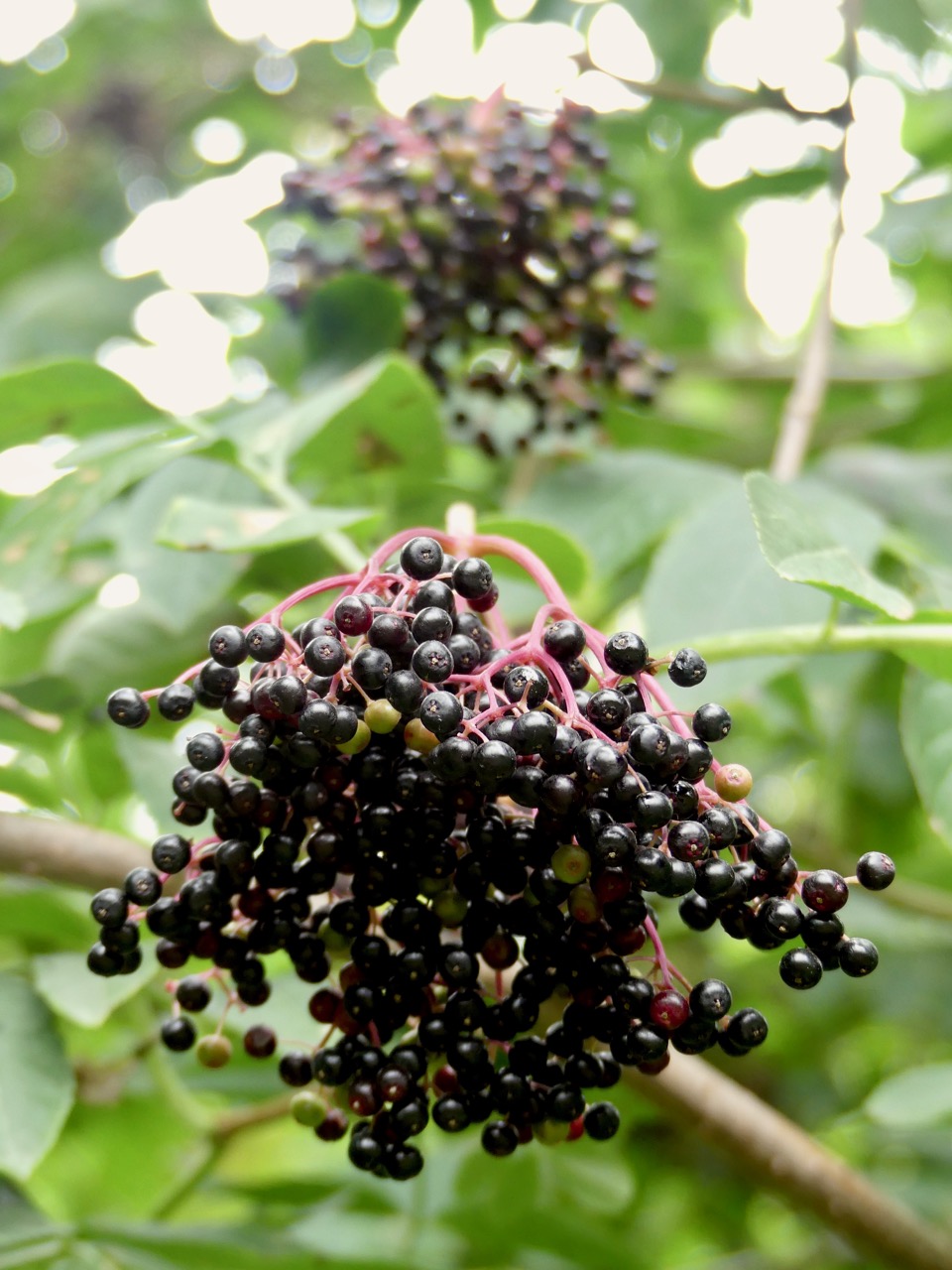
In contrast to the delicate creamy elder flowers with their musky, distinctive fragrance, the berries that ripen through late January and all through February are dark staining and powerful medicine. 


I have made syrups with the elder berries and even tried them raw, but they do not agree with me in that state, so instead, each year, I make an elixir- which is very simple and utterly delicious.
The berries must be as ripe as possible- dark and black, so you have to nab them just before the birds get to them. If they are not quite ripe all over just leave them in a bowl for a day or two & they will soon darken up. 
Remove the berries from their clusters with your fingers or a fork. I don't worry too much about the odd stalk. Fill any sized jar with the berries to around two thirds full, pour in some brandy until  the berries are just covered and then add honey to taste. You'll need a good lot of honey as elderberries have no natural sweetness of their own.
Leave in a cool dark place for a good month to 6 weeks before eating.

So all you need is a jar with a good lid, the elderberries, brandy and honey.

The first year I poured off the elixir and bottled it.
Now I just leave it all in together, as I find the berries are also then edible having been "marinated" nicely and are utterly delicious.
The elixir can then be taken by the spoonful, diluted in to water, fizzy water or added in to a hot drink of fruity tea. Drizzled over ice cream or added in to a berry cheesecake also works very nicely.
The elixir is then ready just in time for autumn and helpful for buoying the immune system as we head in to cooler weather. Elder flowers and berries are lovely medicine and provide useful and unique nutrients too. 

http://bearmedicineherbals.com/another-gratuitous-elderberry-post.html

You can also see how to make a simple elderflower fizz just here.

Saturday, December 1, 2018

Elderflowers- Jelly & Fizz

Every October I start looking out for the first elderflowers.
 I just adore the sweetly scented bridal flowers.
They are also lovely medicinal plants- both the flowers & the berries being good medicine.
I am often drawn to posts with recipes for using the fragrant flowers, but when I look further I realise that they are really quite impractical- fritters & sugary cordials don't particularly work for me as useful food.
However, healing jellies & elderflower fizz certainly do!
So here is our simple little recipe for making both, in small batches, using 1 litre Agee or Mason jars.
As soon as the elders begin to flower we keep our eyes peeled for accessible bushes.
And gather just what we need- a little at a time.
This way we can make a dozen batches over the flowering season.
So- to a large Agee jar add 6-8 flower heads (no leaves & no washing- just shake the flowers out a little to dislodge any insects) & the juice of a lemon.
Add some lemon slices too, if you like.
Then pour boiling water over the flowers to fill the jar- once it's cooled a little, add a large tablespoon of honey. I'm sure you can use sugar if you like- dissolve it in to the hot liquid.
Pop the lid on & leave to sit for 24- 48 hours.
Strain through a sieve & using a funnel fill a small grolsch (or similar) bottle.
Clip down the lid & leave for 3-7 days.
You can check on the fizz from time to time if you like- it'll re-carbonate itself.
Take care when you take the lid off as it can froth everywhere.
The fizz is created by the action of the natural yeasts & pollens in the flowers.
Adjust the amount of honey to taste.
Chill well before serving.
The other half of the strained liquid is what we use to make elderflower jellies.
The quantity left will fill two small (225ml) Agee or jam jars perfectly.
How to make the jelly:
In a small pot soak 2 level tsps of powdered gelatine in half a cup of the elderflower liquid.
Stir together & then leave to soak a few minutes.
Set over gentle heat & stir to dissolve the gelatine.
Cool, then and in the rest of the liquid.
Taste & add more lemon juice or more honey to taste.
Pour in to the two jars, pop on the lids & in to the fridge they go.
 Perfectly portable, great for picnics & travelling. Lovely with roasted strawberries & yoghurt.
Makes a delicious breakfast or dessert. And best of all, is wonderfully healing & nourishing for the digestive system.

Katie

Tuesday, October 2, 2018

Sardine or Anchovy Pate

Whoever would have thought that a couple of tins of sardines could make the the most delicious, nourishing pate- ever so versatile & utterly delicious!
I found the concept over at the Western. A. Price foundation here.
Since then (as I do) I have made it a couple of times & tweeked the original recipe.
Look at all those herbs- in they go:
Chickweed, apple mint, coriander, chervil, parsley, spring onions, native celery, tender violet leaves, calendula flowers & anything else that takes your fancy.
Add 2 tins of sardines
& some anchovies- if you have them 
1/2 cup of softened butter (never, ever margarine!!)
salt & freshly ground black pepper
zest & juice of a lemon
dsp whole grain mustard
 Blend all together until smooth-ish in a food processor or with a hand mixer.
 Lovely in artichoke hearts..
 or for lunch- on a violet leaf tortilla, with sauerkraut
and equally good as a dip
 fabulously nourishing & so delicious (not the slightest bit sardiney! Truly.
Katie x